What Is a Kilowatt-Hour? Reading Your Energy Bill
9 min read
If you have ever stared at your electricity bill and wondered exactly what you are paying for, you are not alone. The single most important number on that bill is measured in kilowatt-hours, usually shortened to kWh. So what is a kilowatt hour, and why does your energy supplier care about it so much? In plain English, a kilowatt-hour is simply a unit that measures how much electricity you have used over time. Understand it once, and the rest of your bill stops looking like a foreign language. This guide breaks down the kWh, shows you where to find it, and explains how to turn that number into real-world decisions about the appliances in your home.
What is a kilowatt-hour (kWh)? A plain-English definition
A kilowatt-hour is the amount of energy used by a 1,000-watt (one kilowatt) appliance running for one full hour. That is the whole idea in a single sentence. The “kilowatt” part describes how fast electricity is being used at any moment, and the “hour” part adds the element of time. Multiply how powerful something is by how long it runs, and you get kilowatt-hours.
Here is a friendly way to picture it. Imagine a tap filling a bucket. The width of the tap is how fast the water flows, and the length of time you leave it on decides how full the bucket gets. Electricity works the same way. A powerful appliance is like a wide tap, and leaving it on a long time fills your “energy bucket” faster. The kWh is the measure of how full that bucket is at the end of the month.
So when you ask what is a kilowatt hour in everyday terms, the answer is this: it is the standard unit your energy company uses to count your electricity, and it is the figure that gets multiplied by a price to produce the charge on your bill.
Kilowatts vs. kilowatt-hours: power versus energy explained
The most common point of confusion is the difference between a kilowatt (kW) and a kilowatt-hour (kWh). They sound almost identical, but they measure two different things.
- A kilowatt (kW) measures power — how much electricity a device draws at a given instant. It is a rate, like the speed shown on a car’s speedometer.
- A kilowatt-hour (kWh) measures energy — the total amount used over time. It is more like the distance on a car’s odometer.
A car travelling at a certain speed for a certain time covers a certain distance. In the same way, a device drawing a certain number of kilowatts for a certain number of hours uses a certain number of kilowatt-hours. The formula is straightforward:
Power (in kW) × Time (in hours) = Energy (in kWh)
For example, a 2 kW heater running for three hours uses 2 × 3 = 6 kWh. A 0.1 kW (100-watt) light bulb left on for ten hours uses 0.1 × 10 = 1 kWh. Notice that a small appliance left on for a long time can use just as much energy as a powerful one used briefly. That is the key insight that makes your bill make sense.
How to find and read kilowatt-hours on your electricity bill
Once you know what is a kilowatt hour, your bill becomes far easier to decode. Most electricity bills follow a similar pattern, even if the layout differs between suppliers. Look for these sections:
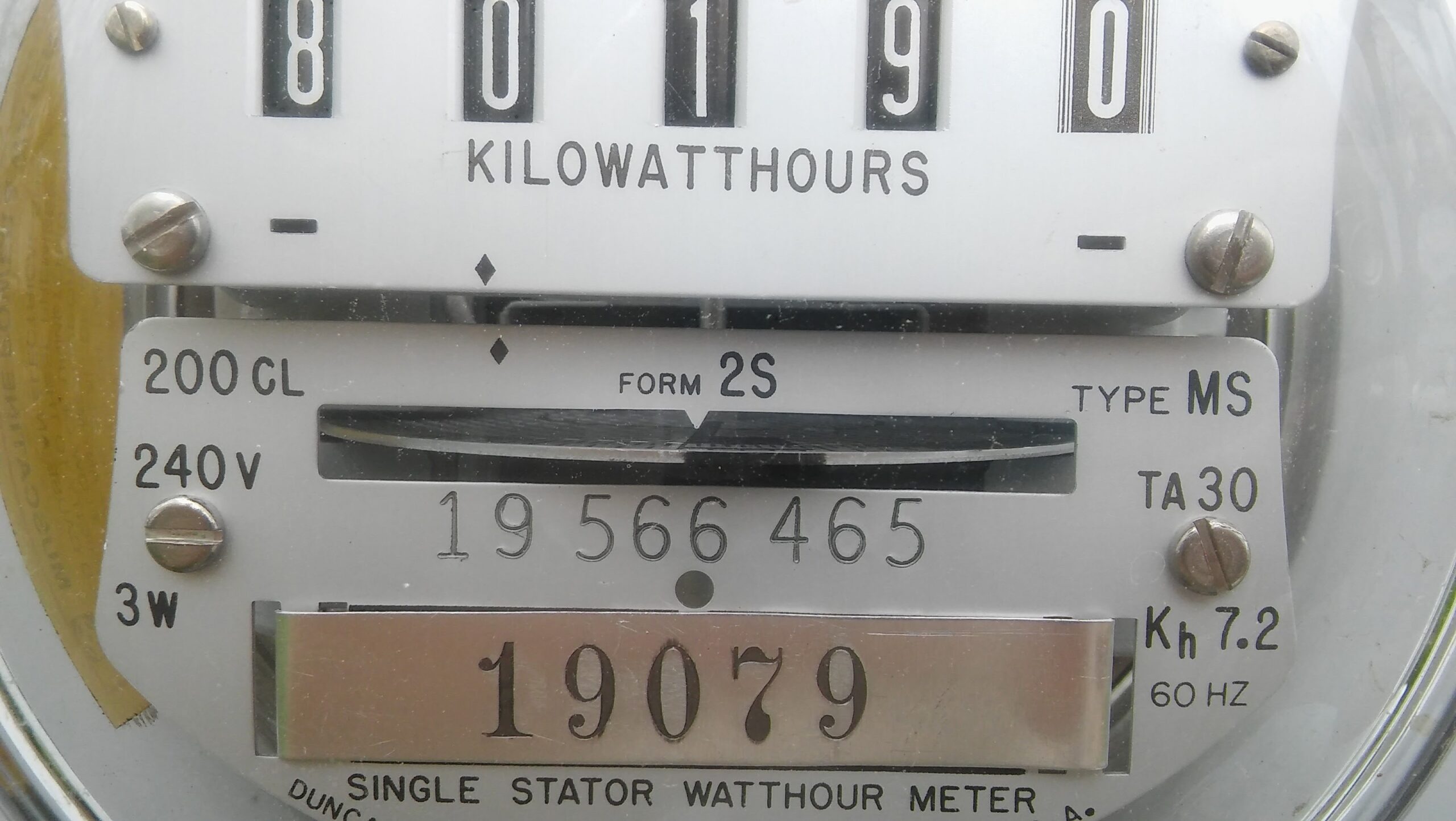
- Meter readings. Your bill usually shows a previous reading and a current reading. The difference between the two is how many kilowatt-hours you used during the billing period.
- Total kWh used. This is often labelled as your “usage,” “consumption,” or “units used.” It is the headline figure that drives most of your charge.
- Unit rate or price per kWh. This is the amount you are charged for each kilowatt-hour. Your supplier multiplies your total kWh by this rate.
- Standing charge or fixed fee. Many suppliers add a daily fee that you pay regardless of how much energy you use. This is separate from your kWh charges.
- Estimated vs. actual readings. If your bill says “estimated,” the supplier has guessed your usage rather than reading the meter. Submitting your own reading keeps your bill accurate.
The basic maths is simple: your total kilowatt-hours multiplied by the price per kWh, plus any standing charge, gives you the bottom-line figure. If you can read your meter, subtract the older reading from the newer one and you have calculated your own usage before the bill even arrives.
What about gas bills?
Gas is often measured in kilowatt-hours too, even though your gas meter may display cubic metres or cubic feet. Suppliers convert that volume into kWh so they can charge a consistent unit rate. The principle is the same: more kWh means a higher charge.
How much energy common appliances use in kWh
Different appliances draw very different amounts of power, which is why some barely register on your bill while others dominate it. As a general rule, anything that heats or cools tends to be the hungriest. Here is a rough guide to how appliances compare, from highest to lowest typical usage:
- Heating and cooling. Electric heaters, air conditioners, and heat pumps are usually the largest single users in a home because they draw a lot of power and often run for long stretches.
- Water heating. Electric water heaters, kettles, and showers use a great deal of energy, though kettles run only briefly.
- Cooking. Ovens, hobs, and electric grills draw significant power while in use.
- Laundry and dishwashing. Washing machines, tumble dryers, and dishwashers combine moderate power with longer cycles, especially when heating water.
- Refrigeration. Fridges and freezers use modest power but run constantly, so their total adds up over a month.
- Electronics and lighting. Televisions, laptops, phone chargers, and modern LED bulbs use relatively little energy each.
The pattern to remember is that high power plus long running time equals high kWh. A device that is both powerful and frequently used is where your money goes.
How to calculate what an appliance costs to run
You can estimate the running cost of almost any appliance with one short calculation. You only need two pieces of information: the appliance’s power rating and your price per kilowatt-hour.
The power rating is usually printed on a label on the appliance or in its manual, shown in watts (W) or kilowatts (kW). To convert watts to kilowatts, divide by 1,000. The price per kWh is on your electricity bill. Then follow these steps:
- Step 1: Find the appliance’s power in kilowatts. A 1,500-watt appliance is 1.5 kW.
- Step 2: Decide how many hours it runs. For example, two hours a day.
- Step 3: Multiply power by hours to get kWh used. 1.5 kW × 2 hours = 3 kWh per day.
- Step 4: Multiply the kWh by your price per kWh from your bill to get the daily cost. Multiply by 30 for a rough monthly cost.
This simple method lets you compare appliances fairly. An appliance with a high power rating that runs for hours will cost noticeably more than a low-power device used briefly, even if both feel essential. Running the numbers often reveals surprises, such as how much a single space heater or tumble dryer can add to a bill.
Simple ways to cut your kilowatt-hour usage
Because your bill is driven by kilowatt-hours, lowering your kWh is the most direct way to spend less. You do not need to live in the dark, just be smart about the biggest users. Practical, no-cost or low-cost steps include:
- Target the heavy hitters. Focus on heating, cooling, and hot water first, since small changes there save more kWh than switching off a phone charger ever will.
- Reduce running time. Heat or cool only the rooms you use, and avoid leaving high-power devices running longer than needed.
- Wash smarter. Use lower-temperature wash settings and run full loads so each cycle does more work for the same energy.
- Switch to efficient lighting. LED bulbs use far fewer watts than older incandescent bulbs for the same brightness.
- Mind standby power. Devices left on standby still draw a trickle of electricity. Switching them off fully chips away at your total.
- Read your meter regularly. Tracking your kWh week to week helps you spot spikes and see whether your changes are working.
Small habits add up. Every kilowatt-hour you avoid using is one you do not have to pay for.
Frequently Asked Questions
Is a kilowatt-hour the same as a kilowatt?
No. A kilowatt (kW) measures power, meaning how fast electricity is being used at a moment in time. A kilowatt-hour (kWh) measures energy, meaning the total amount used over a period. You multiply power by time to get energy, just as speed multiplied by time gives distance.
How do I work out how many kilowatt-hours I have used?
Subtract your previous meter reading from your current meter reading, and the difference is the kilowatt-hours used in that period. Alternatively, multiply an appliance’s power in kilowatts by the number of hours it runs to estimate the kWh it consumes.
Why do appliances that make heat use the most kilowatt-hours?
Heating and cooling require a lot of power, and these appliances often run for long stretches. Since kWh is power multiplied by time, high-power devices that run for hours rack up the most kilowatt-hours, which is why they usually dominate an electricity bill.
The bottom line
Once you understand what is a kilowatt hour, your energy bill changes from a confusing list of numbers into a clear story about how you use electricity. A kWh is simply power multiplied by time, the unit your supplier counts and charges for. Find it on your bill, use the quick formula to estimate appliance costs, and focus your savings on the biggest power users. With that knowledge, you are in control of your bill rather than the other way around.
Featured image: Electricity Meter Closeup — LordShadowWing (BY-SA) via Openverse