
What Is a Heat Pump and How Does It Work?
If you have shopped for home heating or cooling recently, you have probably run into a deceptively simple question: what is a heat pump, and how can a single appliance both warm a house in winter and cool it in summer? The short answer is that a heat pump is a device that moves heat from one place to another rather than burning fuel to create it. That one design choice is what makes it so versatile and so energy efficient. This explainer walks through how the technology works, the main types available, what drives their performance, and the kinds of homes and climates where they tend to make the most sense.
What Is a Heat Pump, in Plain Terms
At its core, a heat pump is an electric appliance that transfers heat between the inside of a building and the outside. In heating mode, it pulls warmth from the outdoor air, ground, or water and delivers it indoors. In cooling mode, it does the reverse, removing heat from inside your home and releasing it outside. In that sense, the everyday refrigerator and air conditioner in your home are already heat pumps; they just happen to run in one direction.
The key idea to hold onto is that a heat pump does not generate heat the way a furnace, boiler, or electric resistance heater does. It relocates heat that already exists. Because moving energy takes far less work than producing it from scratch, a well-matched system can deliver several units of heat for each unit of electricity it consumes. That efficiency is the central reason heat pumps have become a focus of conversations about home energy and comfort.
How a Heat Pump Moves Heat Instead of Making It
It can feel counterintuitive that there is usable heat in cold outdoor air. But “cold” is relative. Even air that feels freezing to us still contains thermal energy, and a heat pump is designed to capture that energy and concentrate it. The trick is a special working fluid, called a refrigerant, that boils and condenses at convenient temperatures and can absorb heat from surroundings that are colder than a warm room.
Think of it like a sponge for heat. The refrigerant soaks up warmth from a low-temperature source, the system squeezes and concentrates that warmth so it becomes hot enough to be useful, and then it releases the heat where you want it. A few simple components make this possible:
- The refrigerant: a fluid that changes between liquid and gas as it picks up and gives off heat.
- The compressor: the part that pressurizes the refrigerant, raising its temperature so it can release useful heat indoors.
- Two heat exchangers (coils): one absorbs heat from the source, the other releases it to the destination.
- A reversing valve: the clever switch that lets the same system flip between heating and cooling.
The Refrigeration Cycle Behind Heating and Cooling
The engine of every heat pump is the refrigeration cycle, a continuous loop with four basic stages. Understanding it in plain language demystifies the whole appliance.
- Evaporation: Cold, low-pressure refrigerant passes through the outdoor coil (in heating mode) and absorbs heat from the surrounding air or ground, causing it to boil into a gas.
- Compression: The compressor squeezes that gas, dramatically raising its pressure and temperature so it becomes hotter than the indoor air it needs to warm.
- Condensation: The hot gas flows through the indoor coil, releases its heat into your living space, and condenses back into a liquid.
- Expansion: The liquid passes through an expansion device that drops its pressure and temperature, returning it to a cold state so the cycle can begin again.
In cooling mode, the reversing valve flips the direction of the refrigerant, so the indoor coil now absorbs heat from your home and the outdoor coil dumps it outside. Nothing about the basic physics changes; the system simply runs the same loop the other way. This is why a heat pump can replace both a furnace and an air conditioner with a single piece of equipment.
Main Types: Air-Source, Ground-Source, and Ductless Mini-Splits
Heat pumps are usually grouped by where they draw heat from and how they distribute it. The three most common categories cover the majority of residential installations.
Air-Source Heat Pumps
Air-source systems exchange heat with the outdoor air and are by far the most common type. They are relatively straightforward to install and tend to have lower upfront costs than ground-source systems. Many connect to a home’s existing ductwork to distribute conditioned air, making them a natural replacement for a traditional central air-conditioning and furnace setup.
Ground-Source (Geothermal) Heat Pumps
Ground-source systems, often called geothermal, exchange heat with the ground or a body of water through buried loops of piping. Because soil a few feet down stays at a relatively stable temperature year-round, these systems have a steadier heat source and can be very efficient. The tradeoff is a more involved and costly installation, since it requires excavation or drilling to place the ground loops.
Ductless Mini-Splits
Ductless mini-splits are air-source heat pumps that skip the ductwork entirely. They pair an outdoor unit with one or more indoor units mounted on walls or ceilings, each conditioning a specific zone. They are popular for homes without existing ducts, for additions and converted spaces, and for anyone who wants room-by-room temperature control.
Why Heat Pumps Are So Energy Efficient (and What Affects Performance)
Returning to the question of what is a heat pump good for, efficiency is the headline. Because the system moves existing heat rather than burning fuel, the energy it delivers can substantially exceed the electricity it draws. Engineers measure this with ratings such as the coefficient of performance for heating and seasonal efficiency ratings for cooling; higher numbers indicate that more useful heating or cooling is delivered per unit of energy consumed.
Real-world performance, though, depends on several factors that vary from home to home:
- Temperature difference: The bigger the gap between indoor and outdoor temperatures, the harder the system works and the more efficiency falls.
- Equipment quality and sizing: A unit that is properly sized for the space, and ideally uses a variable-speed compressor, performs better than one that is oversized or undersized.
- Installation quality: Correct refrigerant charge, sealed and insulated ducts, and good airflow all matter as much as the equipment itself.
- Home envelope: Insulation, air sealing, and windows determine how much heating or cooling the home actually needs in the first place.
This is why two identical heat pumps can perform quite differently in two different houses. The appliance is only one part of a larger system that includes the building itself.
How Heat Pumps Handle Cold-Weather Climates
A common concern is whether a heat pump can keep up when temperatures drop. As outdoor air gets colder, there is less heat available to extract, so an air-source system has to work harder and its efficiency declines. Older models historically struggled in genuinely cold conditions, which is the source of much of the lingering skepticism.
Modern cold-climate models, however, are engineered specifically for low temperatures, using technologies such as variable-speed compressors and improved refrigerant management to maintain useful output well below freezing. Several design strategies help in cold weather:
- Cold-climate-rated equipment that is tested to perform at low outdoor temperatures.
- Backup or supplemental heat, such as an electric resistance element or an existing furnace, that engages only during the coldest stretches in what is known as a dual-fuel or hybrid setup.
- Defrost cycles that periodically clear frost from the outdoor coil so it keeps absorbing heat efficiently.
- Ground-source designs, which sidestep extreme air temperatures by drawing from comparatively stable underground conditions.
The practical takeaway is that climate matters for sizing and equipment selection, but cold weather alone does not rule out a heat pump. It mainly shapes which type and configuration is appropriate.
Who a Heat Pump Makes Sense For: A Balanced Summary
Heat pumps tend to be a strong fit for homeowners who want a single system for both heating and cooling, who are replacing aging equipment anyway, or who are building or renovating and can design around the technology. They often pair especially well with homes that have good insulation and air sealing, since a tighter building reduces the heating and cooling load the system must meet.
They may be a more complicated choice in certain situations: homes in extreme climates without cold-climate-rated equipment, properties where electricity is unusually expensive relative to other fuels, or buildings where the existing distribution system is poorly suited to the equipment. As with any major home system, the right answer depends on local conditions, the state of the existing setup, and a careful assessment by a qualified installer who can size the system correctly.
None of these tradeoffs change the underlying appeal. The reason the technology keeps coming up in home energy discussions is simple, and it brings us back to the original question of what is a heat pump at its essence: an efficient, electric, two-in-one way to move heat into or out of a home rather than burning fuel to make it.
Frequently Asked Questions
Does a heat pump work for both heating and cooling?
Yes. A heat pump uses a reversing valve to run its refrigeration cycle in either direction, so the same unit can pull heat into your home in winter and remove heat in summer. This is what lets one system replace both a furnace and a separate air conditioner.
Is a heat pump more efficient than a furnace?
In terms of how much heat it delivers per unit of energy, a heat pump is typically very efficient because it moves existing heat rather than generating it by combustion. Actual cost savings depend on local energy prices, climate, equipment quality, and how well the home is insulated, so the comparison varies by household.
Can a heat pump work in freezing temperatures?
Modern cold-climate heat pumps are designed to operate well below freezing, though their efficiency declines as it gets colder. In very cold regions, systems are often paired with supplemental or backup heat, or configured as ground-source designs, to maintain comfort during the coldest periods.
Understanding what is a heat pump comes down to a single principle: it transfers heat rather than creating it, which is why one appliance can both warm and cool a home while using energy efficiently. The best choice of type, size, and configuration depends on your climate, your home’s condition, and a proper professional assessment, but the underlying technology offers a flexible, all-in-one approach to home comfort that is worth understanding before any major heating or cooling decision.
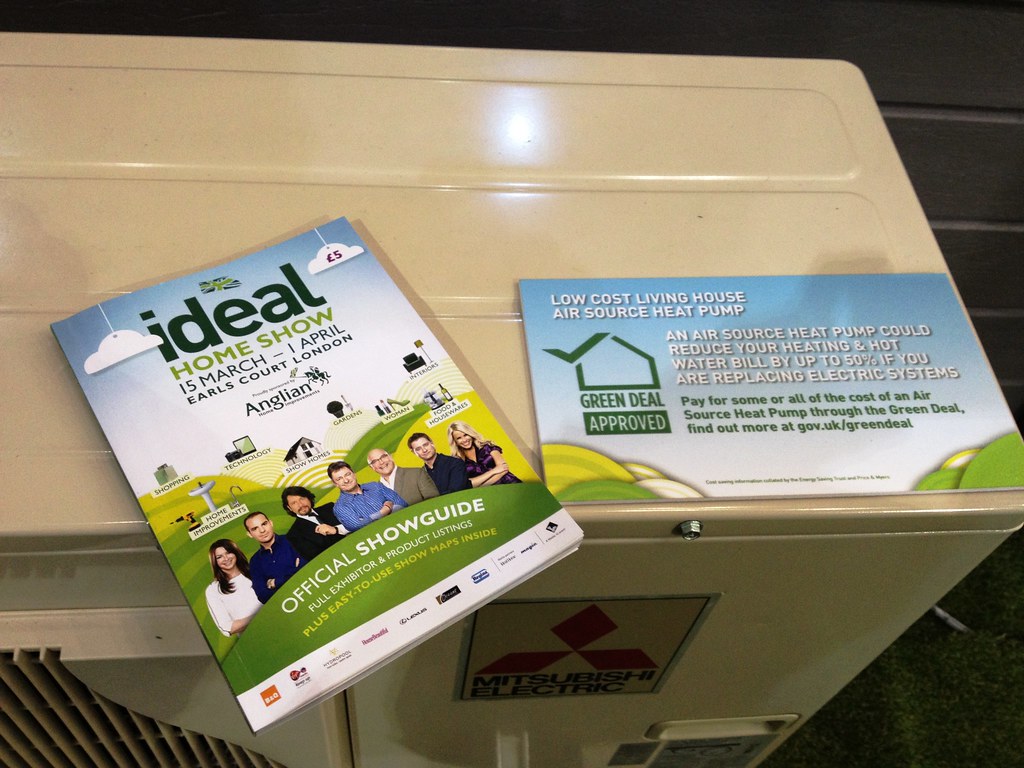
Featured image: An air source heat pump at the Ideal Home Show — DECCgovuk (BY-ND) via Openverse