What Causes Inflation? The Main Drivers Explained
If you have ever noticed that the same basket of groceries costs more this year than last, you have felt inflation firsthand. But understanding what causes inflation requires looking past any single price tag and examining the broad forces that push the general level of prices upward across an entire economy. Inflation is rarely the result of one villain. Instead, it usually emerges from an interplay of demand, production costs, the supply of money, and the expectations people carry about the future. This explainer breaks down the main drivers in plain language so you can see how they fit together.
What inflation actually measures
Inflation is the rate at which the overall level of prices for goods and services rises over a period of time, usually measured year over year. It is not the same as a single product becoming more expensive. The price of one item can climb because of a temporary shortage or a change in fashion, but that is not inflation. Inflation describes a sustained, economy-wide increase that erodes the purchasing power of money, meaning each unit of currency buys a little less than it did before.
It also helps to distinguish inflation from related terms. Disinflation is when prices are still rising but more slowly than before. Deflation is the opposite of inflation, a sustained fall in the general price level. When economists talk about inflation, they are typically focused on the average experience of a typical household, captured through baskets of common purchases rather than any one transaction.
Demand-pull inflation: too much money chasing too few goods
One of the most intuitive answers to the question of what causes inflation is demand-pull inflation. This occurs when the demand for goods and services outstrips the economy’s ability to produce them. The classic shorthand is “too much money chasing too few goods.” When buyers collectively want more than producers can supply at current prices, sellers respond by raising prices, and the general price level drifts upward.
Demand can surge for several reasons:
- Rising incomes and confidence: When people feel financially secure, they tend to spend more freely.
- Easier access to credit: Cheap borrowing lets households and businesses spend beyond their current cash on hand.
- Government spending: Public investment and transfers can add to overall demand in the economy.
- Strong exports: Foreign buyers competing for domestic goods add another source of demand.
Demand-pull pressure is most likely to translate into higher prices when the economy is already operating near full capacity, with factories busy and workers fully employed. In that situation, there is little slack to absorb extra spending, so prices rather than output do the adjusting.
Cost-push inflation: when production costs rise
The other major mechanism is cost-push inflation, which comes from the supply side rather than the demand side. Here, prices rise because it becomes more expensive to produce goods and deliver services. Businesses facing higher input costs often pass at least part of those costs on to customers to protect their margins.
Common sources of cost-push pressure include:
- Raw materials: When the cost of energy, metals, or agricultural inputs climbs, the products built from them tend to cost more.
- Labor: Higher wages, especially if not matched by gains in productivity, raise the cost of producing nearly everything.
- Transport and logistics: Shipping, fuel, and warehousing costs feed into the final price of goods.
- Taxes and regulation: Certain policy changes can raise the cost of doing business.
The key difference is direction. With demand-pull inflation, buyers bid prices up. With cost-push inflation, sellers raise prices to cover their own rising expenses. In the real world, both forces frequently operate at once, which is part of why inflation can be tricky to diagnose and address.
The role of the money supply and central banks
Behind both demand and cost pressures sits a deeper factor: the amount of money circulating in the economy. A long-standing principle in economics holds that if the supply of money grows much faster than the supply of goods and services, the general price level tends to rise. In simple terms, when there is more money available relative to the things it can buy, each unit of money tends to be worth less.
Central banks are the institutions most associated with managing this balance. Through their influence over interest rates and the broader availability of credit, they aim to keep inflation reasonably low and stable. When inflation runs high, a central bank may raise interest rates, which makes borrowing more expensive, tends to cool spending and investment, and eases upward pressure on prices. When the economy is weak, it may do the reverse to encourage activity.
This is why so much public attention focuses on central bank decisions. They cannot control every cause of inflation, particularly supply shocks originating outside the financial system, but they have powerful tools for influencing overall demand and the cost of money over time.
Supply shocks, wages, and inflation expectations
Beyond the core drivers, three additional factors strongly shape how inflation behaves.
Supply shocks
A supply shock is a sudden disruption to the availability of important goods or inputs. Events such as natural disasters, conflicts that interrupt trade routes, or breakdowns in supply chains can abruptly reduce what is available, pushing prices up quickly. These shocks are often temporary, but they can be sharp and painful while they last.
Wages and the wage-price relationship
Wages play a dual role. They are an input cost for businesses, but they are also income that fuels demand. When prices rise, workers may seek higher pay to keep up, and if employers grant raises and then raise prices to cover them, a self-reinforcing cycle can develop. Economists sometimes call this a wage-price spiral, though whether and how strongly it takes hold depends on the specific conditions of an economy.
Inflation expectations
Perhaps the most underappreciated driver is psychology. Inflation expectations describe what households and businesses believe will happen to prices in the future. If people expect prices to keep rising, they may demand higher wages, accept higher prices more readily, and spend sooner rather than later. These behaviors can help bring about the very inflation that was anticipated. This is why keeping expectations anchored and stable is considered so important.
How inflation is tracked with price indexes like the CPI
To measure something as broad as the general price level, statisticians rely on price indexes. The best known is the Consumer Price Index (CPI), which tracks the average change over time in the prices paid by households for a representative basket of goods and services. The basket typically spans categories such as food, housing, transportation, healthcare, and recreation.
Here is the general idea of how it works:
- Define a basket: Statisticians select goods and services that reflect typical household spending.
- Weight the items: Categories that take up more of a household budget, such as housing, carry more weight in the index.
- Track prices over time: The cost of the basket is monitored regularly.
- Compare periods: The change in the basket’s total cost from one period to another expresses the inflation rate.
Other measures exist alongside the CPI, including indexes that track prices at the producer level or that exclude volatile categories like food and energy to reveal underlying trends. No single index captures every person’s experience perfectly, since spending patterns differ, but together these tools give a reliable picture of how prices are moving across the economy.
Why some inflation is normal: a balanced summary
It may be surprising, but a modest, steady rate of inflation is generally viewed as healthy rather than something to eliminate entirely. Gentle inflation encourages spending and investment rather than hoarding cash, gives businesses room to adjust wages and prices smoothly, and provides a buffer against the more damaging risk of deflation, where falling prices can cause people to delay purchases and stall economic activity.
The concern arises when inflation becomes high, volatile, or unpredictable. In those conditions, it becomes harder for households to plan, for businesses to set prices, and for savings to retain their value. That is why policymakers generally aim for low and stable inflation rather than zero.
Frequently Asked Questions
Is inflation always a bad thing?
No. A low and stable rate of inflation is widely considered normal and even beneficial, because it supports steady spending and investment and guards against deflation. Problems arise mainly when inflation becomes high, erratic, or persistent, which makes planning and budgeting difficult for everyone.
What is the difference between demand-pull and cost-push inflation?
Demand-pull inflation happens when buyers want more goods and services than the economy can readily supply, bidding prices upward. Cost-push inflation happens when the cost of producing goods rises and businesses pass those higher costs on to customers. They come from opposite sides of the market and often occur together.
Can a single cause explain all inflation?
Rarely. Most episodes of inflation reflect a combination of forces, such as strong demand, rising production costs, growth in the money supply, supply shocks, and shifting expectations. Understanding what causes inflation usually means weighing several of these drivers at once rather than pointing to a single factor.
So when you ask what causes inflation, the most accurate answer is that several forces tend to work together: demand that outpaces supply, rising production costs, growth in the money supply relative to output, sudden supply shocks, and the expectations people hold about future prices. No single lever explains every case, which is why economists, central banks, and policymakers watch a range of indicators rather than any one number. Grasping these drivers will not stop prices from rising, but it does turn an abstract headline into something you can reason about with clarity and confidence.
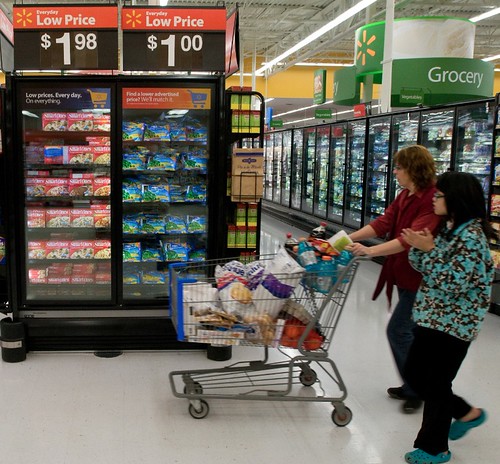
Featured image: Walmart Shoppers Notice Signs Promoting Everyday Low Prices Around the Store — Walmart Corporate (BY) via Openverse